Posts

NetJets's blue ocean strategy
Image
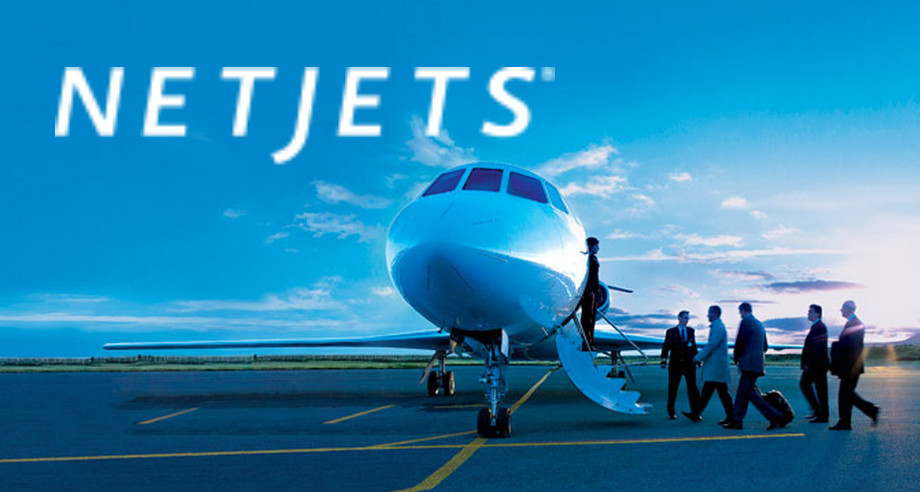
NetJets reconstructed market boundaries to create a blue ocean by looking across alternative industries. NetJets observed that business travellers, the most lucrative mass of customers, have two principal choices: They can fly business class or first class on a commercial airline or the company can purchase its own aircraft to serve its corporate travel needs. Why would corporations choose one alternative industry over another? Commercial travel avoids the high up-front, fixed-cost investment of a multimillion dollar jet aircraft. Also, a company purchases only the number of corporate airline tickets needed per year, lowering variable costs and reducing the possibility of unused aviation travel time that often accompanies the ownership of corporate jets. On the other hand, corporations buy private jets to dramatically cut total travel time, to reduce the hassle of congested airports, to allow for point-to-point travel, and to gain the benefit of having more productive and energized...

Strike out!

Image
  ONE of the scarier videos on YouTube was recorded by the nose-cone camera of a fighter jet as it was taking off. Just after the plane leaves the runway a large bird comes hurtling towards it and vanishes into the aircraft’s engine. The pilot spends an agonising 30 seconds or so trying to regain control, before issuing the order to eject, after which the viewer is treated to a shot of the onrushing ground before the screen goes blank. Bird strikes are a problem—sometimes a fatal one—for military and civil aviation alike. America’s Federal Aviation Administration (FAA) reports that there are about 10,000 such strikes a year to the country’s non-military aircraft, costing more than $957m in damage and delays. The worldwide figure is estimated by the European Space Agency to be $1.2 billion. Moreover, though relatively few people have been killed in accidents caused by bird strikes (research by John Thorpe, former chairman of the International Bird Strike Committee, recorded...

The long haul: Flights that ferry us the farthest

Image
THIS is your captain speaking. Welcome aboard Economist flight DEC20 to London. Today's in-flight entertainment is an infographic of the longest commercial flights—“ultra long-haul” routes that last more than 12 hours. We regret to announce that the lengthiest—Singapore Airlines’ flight from the city-state to Newark Airport near New York, at 15,263km—was discontinued last month. That now makes Qantas’ Sydney to Dallas flight the longest, at 13,790km. For those travelling during the holidays, spare a thought for passengers strapped into their seats for around 16 hours, the journey time for these flights. That’s double the duration it took Concorde to complete a similar distance (going round trip between London and Barbados). In the chart below, scroll down to see how these ultra long-haul flights compare. And thank you for choosing The Economist. We appreciate that there are other chart providers and we hope to serve you again for all your infographic interests. Source:  http:/...

Some 96 British Airways employees serve every passenger flying from Baku to London

Image
To coincide with its latest 'To Fly. To Serve' campaign, British Airways has calculated the essential people involved in the customer journey in order to fly from Baku to London. It includes 96 different roles, across 18 different departments, using over 11 external suppliers in the process. The figures rise to 107 roles for premium customers - which can include the additional benefits of fast track boarding, lounge access and personal meet and greets, the company said today. And following the findings that it takes 96 people to get each customer in the air, British Airways is launching special fares to the UK, Europe, USA and Canada across all cabins, until 26 November for travel until 31 July 2014. Seats are available to London from EUR 476* in World Traveller, and EUR 1767* in Club World. Paolo De Renzis, British Airways commercial director, Middle East and Central Asia, said: "Customer experience is at the centre of everything we do, although when you take a step ...

British Airways Billboard Ads Interact With Planes

Image
One of the big selling points of digital billboards is interactivity -- and the definition grew wider this week thanks to British Airways, which unveiled new outdoor ads that interact with planes overhead. The BA campaign, running on Clear Channel’s new “Storm” digital out-of-home network in London, uses surveillance technology and flight schedules to determine when there is a BA plane overhead. When a plane is detected, it triggers an image of a child pointing up at the aircraft, along with a message containing the flight number and departure city -- e.g., “Look, it’s flight BA430 Amsterdam.” That’s followed or accompanied (in installations with more than one sign) by a second message, e.g. “Amsterdam, one of 34 city break destinations.” Other complementary messages highlight things like low fares or the current temperature at the destination. The ads are running on Storm displays in Piccadilly, in Central London, and the West London neighborhood of Chiswick, whose positions ...

Amazon has a Kindle sale to hail new in-flight device rules

Image
Consumers are not the only ones happy about the FAA’s recent decision to let passengers use electronic devices during nearly all phases of the flights. Amazon is marking the occasion with a one-day marketing ploy to offer consumers a discount on various e-reader devices. In a Monday morning release, Amazon said “thank you” and offered a 15 percent discount on various versions of the Kindle Fire, as well as knocking $10 off its $69 basic Kindle. “We’ve been fighting for our customers on this issue for years, and we are thrilled by the FAA’s recent decision,” said an Amazon executive in a statement. The decision, announced on Friday, means an end to seemingly arbitrary rules that required passengers to power down their devices during take-off and landing, despite any evidence that devices like Kindles or iPads have any effect on planes’ navigations systems. As my colleague Kevin Tofel explains, the new rules mean passengers can pretty much use their devices as they like (excep...

FAA to Allow Airlines to Expand Use of Personal Electronics

Image
The U.S. Department of Transportation’s Federal Aviation Administration (FAA) Administrator Michael Huerta today announced that the FAA has determined that airlines can safely expand passenger use of Portable Electronic Devices (PEDs) during all phases of flight, and is immediately providing the airlines with implementation guidance. Due to differences among fleets and operations, the implementation will vary among airlines, but the agency expects many carriers will prove to the FAA that their planes allow passengers to safely use their devices in airplane mode, gate-to-gate, by the end of the year. The FAA based its decision on input from a group of experts that included representatives from the airlines, aviation manufacturers, passengers, pilots, flight attendants, and the mobile technology industry. Passengers will eventually be able to read e-books, play games, and watch videos on their devices during all phases of flight, with very limited exceptions. Electronic items, book...